You walk out to your car on a hot San Diego afternoon, turn the key, and nothing. Or a click. Or it cranks slow and dies. Every summer we see a wave of no-start calls in Mira Mesa, Clairemont, and the inland neighborhoods where afternoon temps push into the 90s. The cause is almost always one of three things — and the symptoms tell you which one before you ever pop the hood.
Why San Diego Heat Murders Batteries
Most car batteries are rated for a 4 to 5 year life. In San Diego's heat, especially inland, that drops closer to 3. Heat accelerates the chemical reaction inside the battery, which sounds like it would help — but it also evaporates electrolyte and corrodes the internal grids. By summer two or three, the battery can still hold enough charge to start the car on cool mornings, then fail completely on a 95-degree afternoon when the cranking demand is highest. If your battery is 3+ years old and you got stranded this week, age plus heat is almost certainly why. (Background reading: why your battery keeps dying.)
Symptom 1: Nothing Happens at All
Turn the key, no click, no crank, no dash lights — or very dim dash lights that flicker and die. That is almost always a dead battery or a corroded terminal. Try the headlights: if they're dim or won't come on, it's the battery. If everything is totally dark, sometimes it's a loose ground cable or a blown main fuse.
Symptom 2: Click, Click, Click
Rapid clicking when you turn the key usually means the battery has just enough juice to engage the starter solenoid but not enough to spin the starter motor. 90% of the time it's the battery. The other 10%, the battery tests fine and the starter is the problem (the solenoid is engaging but the motor is dead inside). A multimeter and a load test sort it out in 5 minutes.
Symptom 3: Slow Crank, Then Starts (or Doesn't)
The classic 'rrrrr... rrrrr... rrrrr' that gets slower until it gives up. Could be a dying battery, but could also be a starter that's drawing too much current as the brushes wear out. We check battery voltage under starter load — if voltage holds above 9.6V during cranking but the engine still won't spin fast enough, the starter is the problem.
Symptom 4: Starts Fine, Then Dies a Few Miles Later
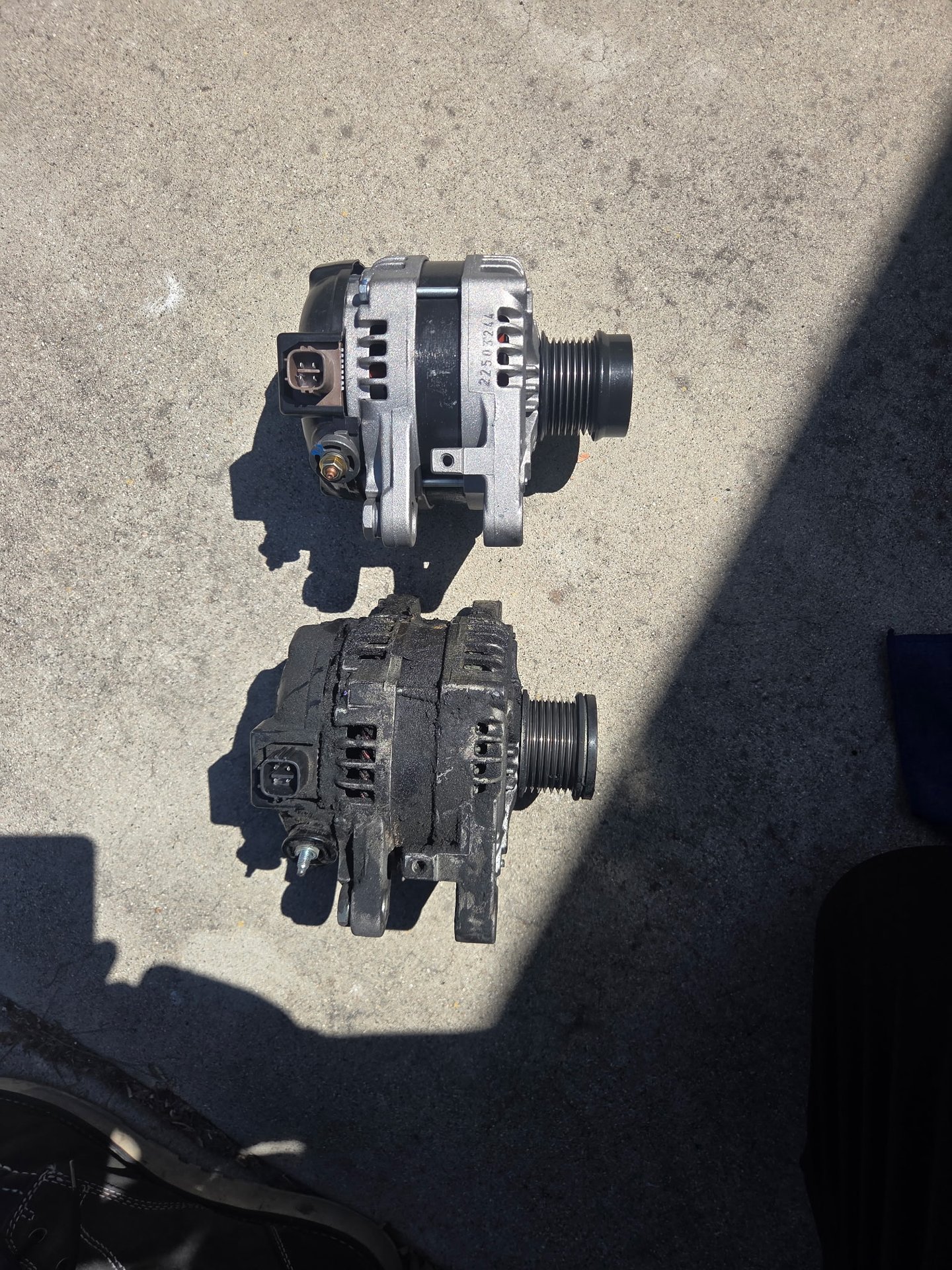
That's not a starting problem — that's a charging problem. The alternator isn't replenishing the battery, so once you've used what was stored, the car dies. Battery warning light on the dash while driving is the giveaway.
Stranded in a parking lot? Don't guess. Call (619) 736-6573. We come out, test everything, and most of the time replace the battery or starter on the spot.
Call (619) 736-6573The Two-Minute Driveway Test
If you have a basic multimeter: with the engine off, a healthy battery reads 12.4-12.7V. Below 12.2V it's discharged. Start the car: voltage should jump to 13.8-14.4V — that confirms the alternator is charging. Below 13V running means the alternator is failing. This is the same test we run on every battery and starter/alternator call, just with a pro-grade load tester.
When to Jump-Start vs Call for Service
If the car was driven yesterday and won't start today, a jump start is worth trying. If it starts and stays running, drive it for 30+ minutes to recharge — but get the battery and alternator tested before it strands you again. If it dies right after the jump, the alternator is dead, not the battery. If it won't even take a jump, the battery is fully done.
Bottom Line
Hot afternoon + a 3+ year old battery + a click on key turn = almost certainly the battery. We carry batteries and starters in the van across all of our San Diego service area, so most no-start calls are fixed on the first visit.