Starters rarely die without warning. They get loud, lazy, and unreliable for weeks or months before they finally won't engage at all. Most of the customers who call us stranded with a dead starter say the same thing afterward: 'Now that I think about it, it was making that noise for a while.' Here's exactly what failing starters sound like — and how to tell a starter from a dead alternator or a dead battery.
Symptom 1: Click-Click-Click on Key Turn
Rapid, repeating clicks when you turn the key is the classic 'something in the starting circuit is failing' sound. Most often it's a weak battery — but if your battery tests good and you still hear rapid clicks, the starter solenoid is engaging and disengaging because the motor itself can't pull enough current to spin. That means the starter is on its way out.
Symptom 2: One Loud Single Click, No Crank
Different from rapid clicking. A single, hard 'CLUNK' followed by silence usually means the starter solenoid engaged but the motor brushes are worn down to nothing. The solenoid kicks the gear forward, but the motor has no juice to spin. This is a dead starter, not a battery — and it almost never recovers.
Symptom 3: Slow, Lazy Crank
RRRR... RRRR... RRRR... that sounds like the engine is trying but can't quite get there. This one's tricky because it could be the battery or the starter. The way we tell: a load test on the battery. If the battery holds above 9.6V under cranking load and the engine still cranks slow, the starter is drawing too much current — usually because the brushes are worn or the bushings are dragging.
Symptom 4: Grinding Noise When Starting
Grinding usually means the starter drive gear (the Bendix) isn't engaging cleanly with the flywheel teeth. Sometimes it's a worn Bendix on the starter. Sometimes the flywheel teeth themselves are chipped. Either way, ignoring grinding will chew up the flywheel — a much bigger and more expensive job than replacing a starter.
Symptom 5: Intermittent No-Start When Hot
This is the most overlooked one. Car starts fine cold. You drive it for 30 minutes, park, come back in 15 minutes, and it won't crank. Wait an hour and it starts again. This is heat-soak failure — the starter motor's internal resistance climbs as it heats up, and on a marginal starter it crosses the threshold where it can't engage. Common in San Diego summers, especially on cars parked in the sun.
Hearing any of these warning signs? Call (619) 736-6573. We test the starter, battery, and alternator together — and if the starter is dead, most jobs are same-day at your driveway.
Call (619) 736-6573Starter vs Alternator — How to Tell
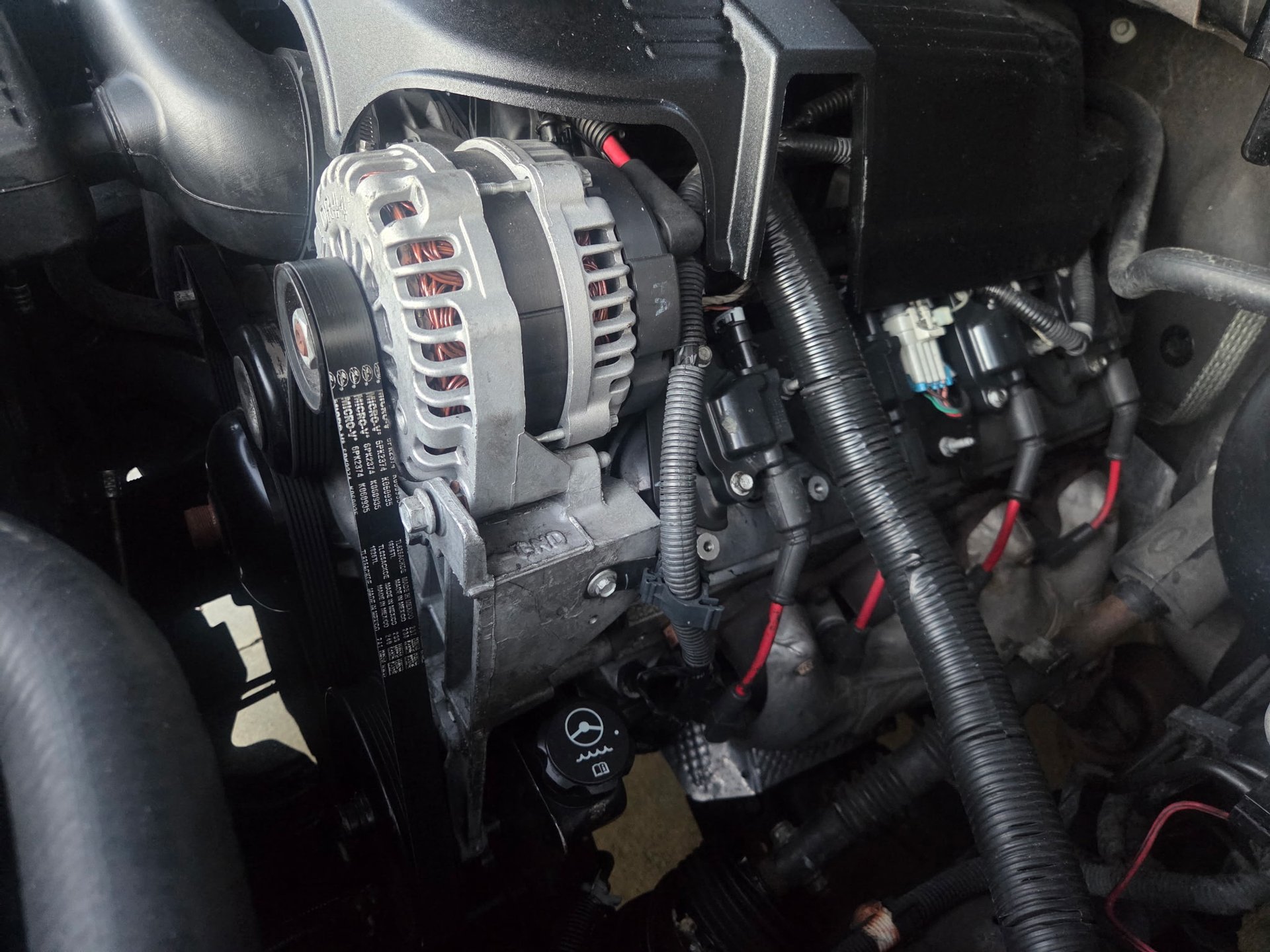
Starter problems happen WHEN YOU START the car. Alternator problems happen WHILE YOU DRIVE — battery warning light, dim headlights, dying after a jump. If the issue is at the moment of cranking, look at the starter (or battery). If the car runs fine when started but slowly loses electrical power, look at the alternator. Background: 5 signs your alternator is dying.
Solenoid vs Starter Motor
Modern starters are usually replaced as a single unit — the solenoid is bolted to the body of the motor and they're rebuilt together. On older trucks and some heavy-duty applications, the solenoid is mounted separately and can be replaced on its own for $50-$150 instead of the whole starter assembly. We diagnose which it is before quoting.
What a Mobile Starter Replacement Costs
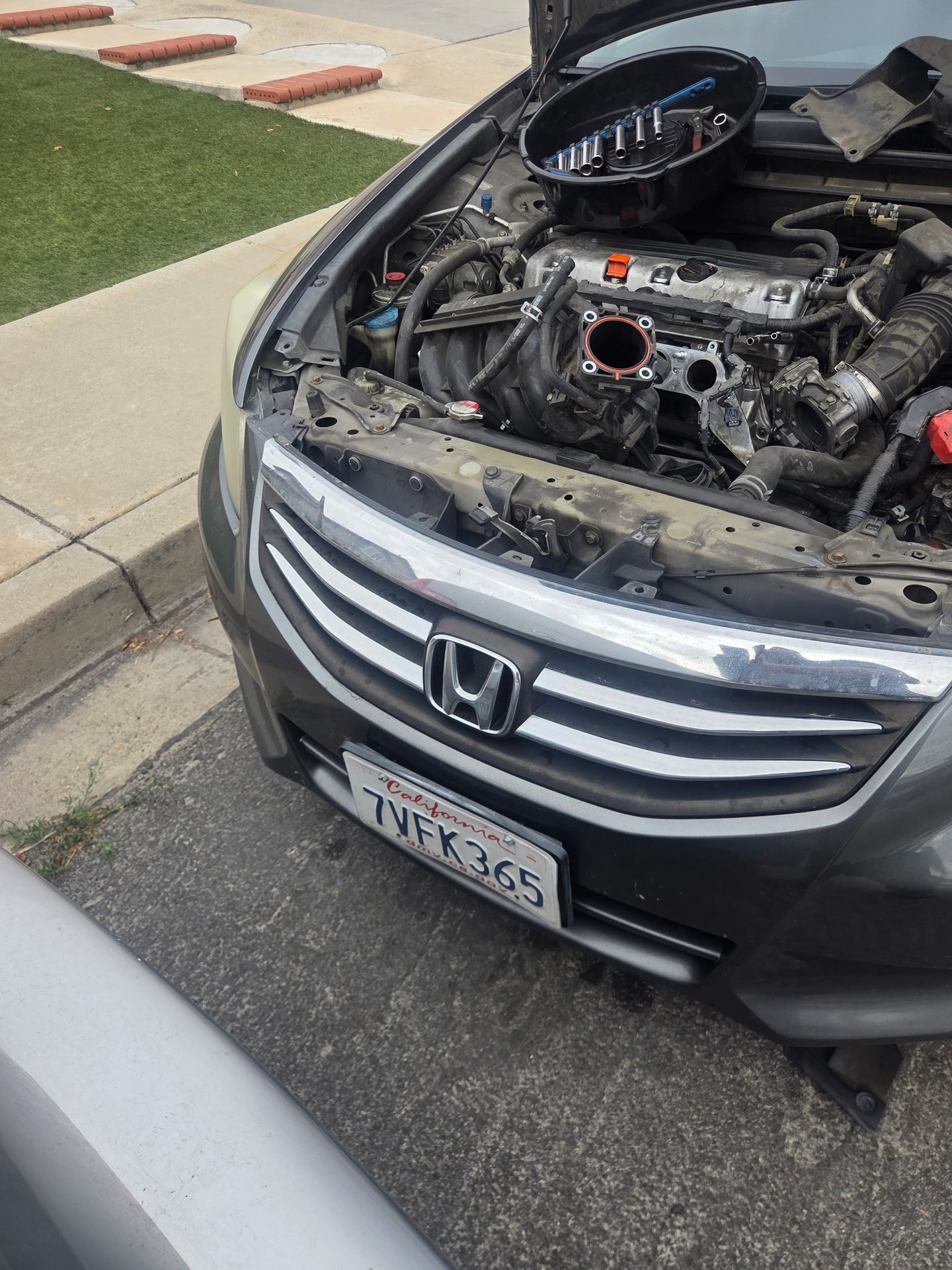
Starter parts run $150-$400 for most domestic and import cars, more for German or hybrid setups. Labor is usually 1-2 hours depending on access (some are bolted to the top of the engine, some are buried under the intake manifold). Same-visit mobile replacement is the standard for most calls — see the full starter and alternator service page for what we handle.
Bottom Line
Don't wait for the starter to fully die in a parking lot at night. If you're hearing the clicks, the slow crank, or the hot-start intermittent issue, get it tested. We cover starter work across our entire San Diego service area — usually same-day.